People
Rebuilding the team from specialists to generalists
How I unlocked team trust and performance by redesigning roles
Junior designers delivered the same caliber of execution once handled by senior specialists, but with greater speed and fewer dependencies.
The Challenge
The pandemic narrowed business scope. Downsizing reshaped the team, roles were unclear, handoffs were inconsistent, and the team had been built as specialists — structured for long, orchestrated initiatives, at exactly the moment the work became fast-moving and uncertain.
My Response
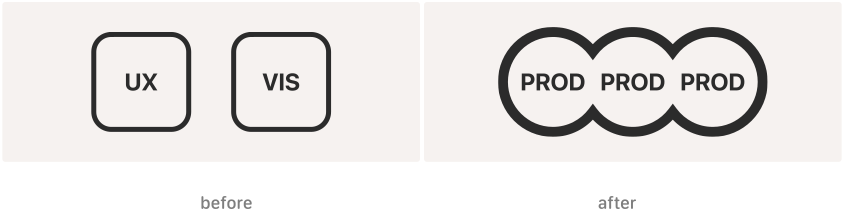
I recognized that building for the future meant doing more with less. So I restructured the team from segmented UX-only and VIS-only roles into a unified product design model, staffed by junior generalists. I coached them to own the full design process, from early framing to final delivery, and supported them with scalable design system tools. The shift didn’t just maintain output. It created flexibility. We could reassign resources as project needs changed, scale work more efficiently, and pivot without bottlenecks. Instead of relying on handoffs between specialists, the team operated as a collaborative unit—delivering faster and aligning product and engineering more effectively.
The Win
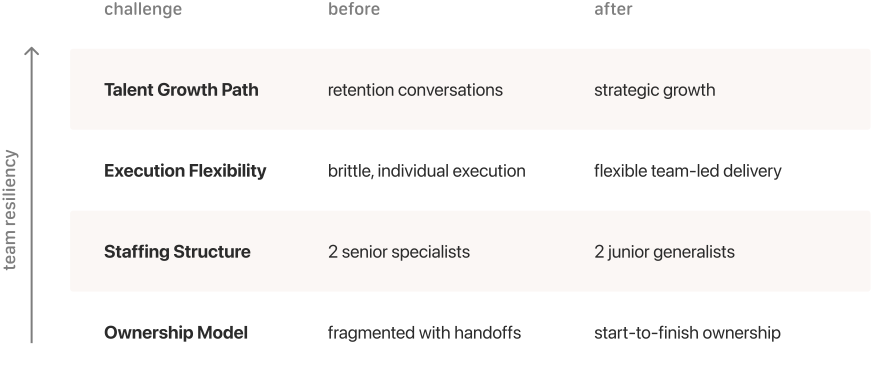
Junior designers, supported by clear expectations and strong systems, delivered the same caliber of execution once handled by senior specialists, but with greater speed, fewer dependencies, and stronger alignment across teams. As the nature of work shifted from urgency to strategy, their growth kept pace. Execution strength evolved into collaboration strength. Designers began contributing to cross-functional planning, clarifying intent, and influencing direction. The team hadn’t just adapted. It had elevated—a success that inspired a new ask: mentoring front-end developers in India as they transitioned into product design.
Key Outcomes
- Improved handoffs by unifying roles and increasing shared ownership
- Shifted to a junior-led model with faster, more flexible execution
- Improved morale through clarity, autonomy, and visible impact
- Enabled organic growth into cross-functional collaboration roles
- Extended impact by mentoring new talent in an adjacent region