Standards
A design system five functions chose to adopt
How I scaled design efficiency by replacing siloed workflows with a shared design system
Product managers began learning the system to guide handoff conversations more confidently.
The Challenge
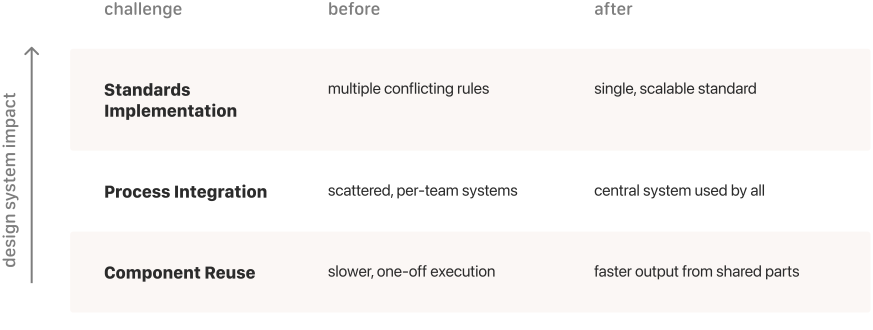
As our product suite grew, design quality began to drift. Teams were working in silos, interpreting brand guidelines differently, duplicating efforts, and rebuilding from scratch. Design decisions varied across functions, creating misalignment and bloated implementation cycles. Handoff breakdowns and QA friction became common, with engineering and design doing rework due to unclear specs or inconsistent design patterns.
My Response
I led the creation of a global design system used across five business functions and more than 200 components. It wasn’t just a visual library; it was a systematic operating layer embedded in the design and engineering workflow.
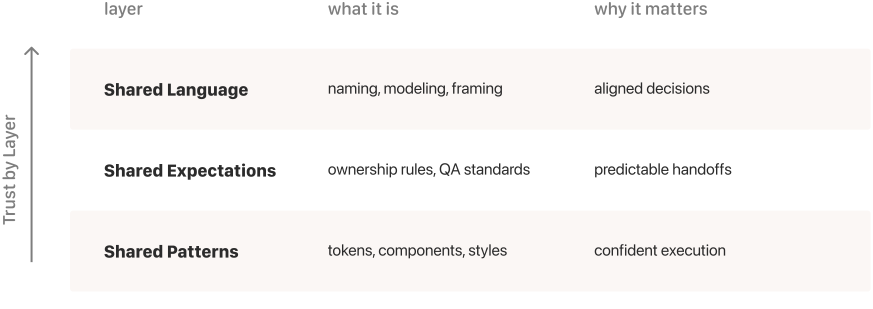
Engineering capitalized on the system by partnering with us on standards, naming conventions, and component integrity. This laid the groundwork for a parallel system that mirrored ours at the foundational component level.
Adoption didn’t come through mandates. It spread through usefulness. Product managers began learning the system to guide handoff conversations more confidently. Rather than relying on designers to clarify specs after the fact, they referenced the system directly and became a stronger bridge between design and engineering.
At the same time, creative and marketing teams adopted system components to accelerate asset production and campaign execution.
The Win
The system quickly evolved from internal asset to organizational dependency. Teams began planning around it, assuming its availability as part of every delivery. What started as a design initiative became a shared infrastructure across product, engineering, and marketing.
Engineering moved faster with fewer blockers. Cross-functional teams built on top of it. For the first time, leadership reviewed rapid prototyped concepts that mirrored final implementation.
Key Outcomes
- Reusable patterns unlocked faster output with fewer blockers across functions
- Clearer handoffs raised team confidence by reducing delivery dependency
- System adoption synced design, engineering, and marketing into shared flows
- Rapid prototyping better reflected what shipped in production
- The design system became the default starting point for project planning