Standards
Knowing when to stop building
How I built culture around the “good enough” paradox to hit business targets on schedule
A bar to exceed in problem definition, and to defend during execution.
The Challenge
During problem definition work, “good enough” is a constant temptation. Teams rely on design briefs, overlook abstractions, and rush to solutions. Then, once execution kicks off, “good enough” suddenly becomes a dirty word—a signal of poor work.
When teams fail to recognize this trap, the results are often impressive features that fail to address true user needs, or that miss product–market fit entirely. All while consuming valuable resources.
My Response
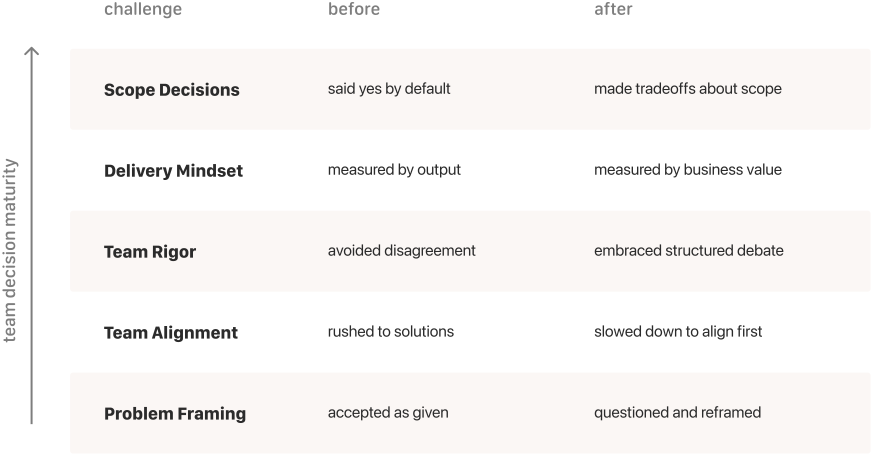
I mentored the team early that “good enough” is a deliberate double standard. We used it to define two kinds of investment: a bar to exceed in problem definition, and to defend during execution. Designers learned to challenge assumptions, align on success criteria, and stop building once real value was delivered.
Designers learned when to challenge stakeholder inputs and how to reframe them. Once they felt they had permission, the obligation to question took hold.
Key Outcomes
- Prioritizing problem definition gave teams permission to question assumptions
- Team rigor improved as shared standards clarified scope and delivery criteria
- Cross-functional trust increased as design judgment improved decision quality