Planning
Three models that tied design to business metrics
How I made design proposals legible to the business
Executives began referencing design levers in funding meetings.
The Challenge
Design was brought in to execute decisions—but not to shape them. The team was skilled and efficient, but its contributions were perceived as visual or tactical. Reviews focused on polish, not purpose. There was no clear structure to show how design work created value, and no shared language for tying user needs to business outcomes.
Proposals weren’t landing—not because they lacked quality, but because they lacked clarity. Leadership struggled to understand the opportunity cost of saying yes. Tradeoffs were buried, assumptions went unstated, and design was seen as opinionated rather than operational.
My Response
I built three instruments that worked as a set. Each is simple alone; the value was in using them together.
A taxonomy of the work. Partnering with product leadership, I translated user insight and feature requests into four strategic levers: Improve Presentation, Optimize Flows, Add Capabilities, or Launch New Features. Every proposal was mapped to one—clarifying where it sat in the business before anyone argued about whether to do it.
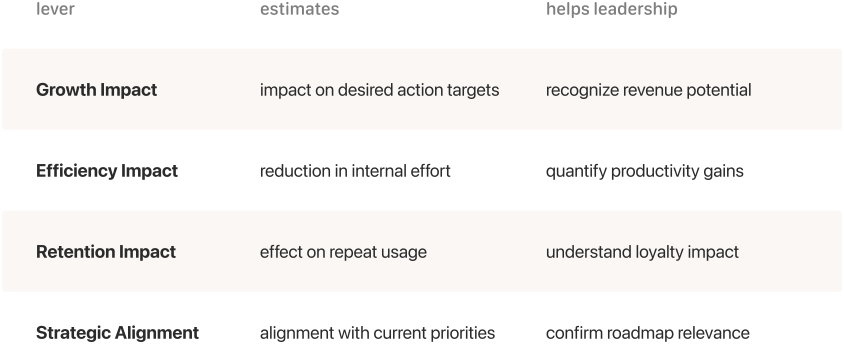
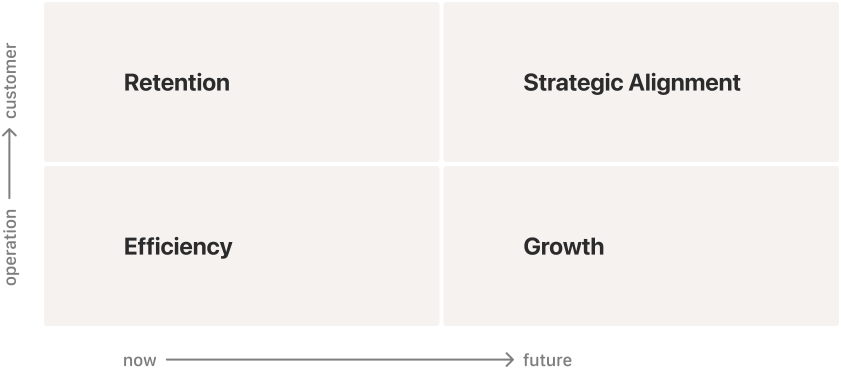
A map to the metrics. Each initiative was then framed against the metrics that guided planning: growth, retention, efficiency, and strategic alignment. What had once been described as UI polish or user delight now read as measurable gains or defensible investments.
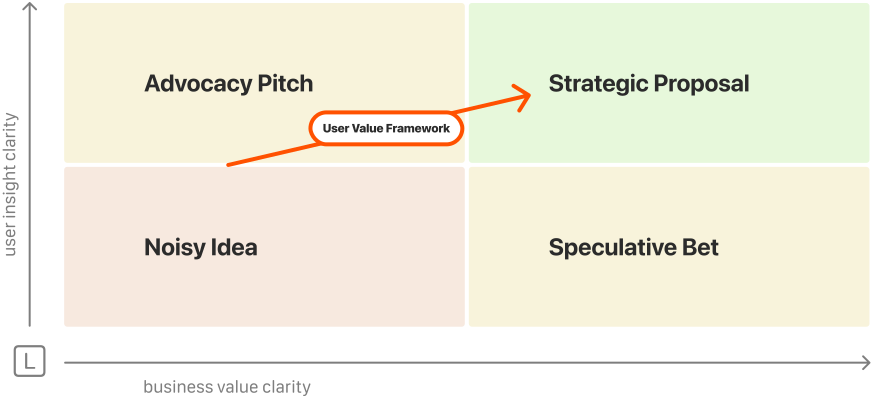
A rubric for the tradeoff. A four-part framework scored decisions across User Value, Business Value, Implementation Ease, and Risk Management. That gave teams a way to assess not only what an idea could deliver, but what it would cost the business to say yes. Every initiative had to be weighed against the ROI of what it would displace.
The Win
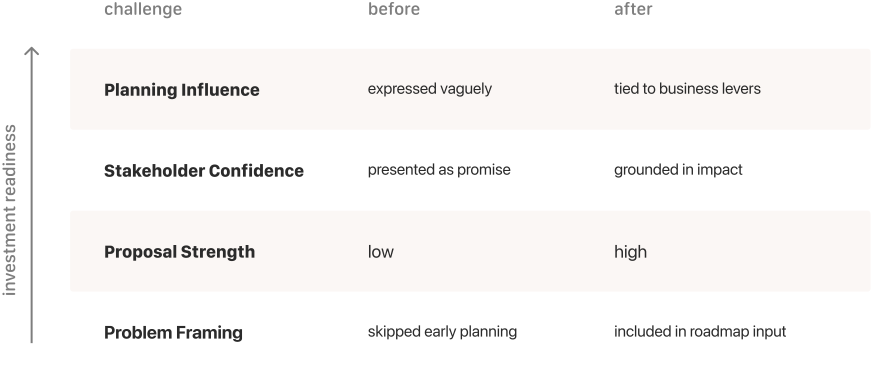
Design moved upstream. Stakeholders expected proposals to be framed before priorities were locked—using the models to align user needs and business goals. Prioritization sharpened, and conversations shifted from pitching solutions to clarifying which needs warranted investment.
Executives began referencing design levers in funding meetings. Cross-functional partners aligned proposals to strategic business goals.
Key Outcomes
- Framed proposals through user value and business levers to earn early trust
- Equipped teams to estimate impact by tying design work to strategic outcomes
- Prioritization shifted from opinions to structured value-based decisions
- Roadmap reviews accelerated as scoring clarified investment tradeoffs
- Earned design a seat in planning by aligning decisions to measurable value